Lake Iseo: what to see, what to do and how to get around the villages and Monte Isola
Lake Iseo marks the northern edge of Franciacorta. From here you can reach the Torbiere nature reserve in ten minutes and Iseo in a quarter of an hour, which is why almost all our guests set aside at least a day for the lake. It is the least crowded of northern Italy’s great lakes. That means no queues at the ferry pier out of season, reasonable prices and villages that still make their living from fishing and net-making.
Here you’ll find how the lake is laid out, how the ferries actually work (the question we’re asked most often at breakfast) and what to see on both shores.
Where Lake Iseo is and what it’s like
It lies between the provinces of Brescia and Bergamo, is just over 25 kilometres long and reaches a depth of around 250 metres, far deeper than its surface would lead you to imagine.
It shares its origins with the hills you can see from our windows. As it moved down the Valle Camonica, the Camonica glacier carved out the basin that now holds the lake and, further south, left behind the moraine hills of Franciacorta.
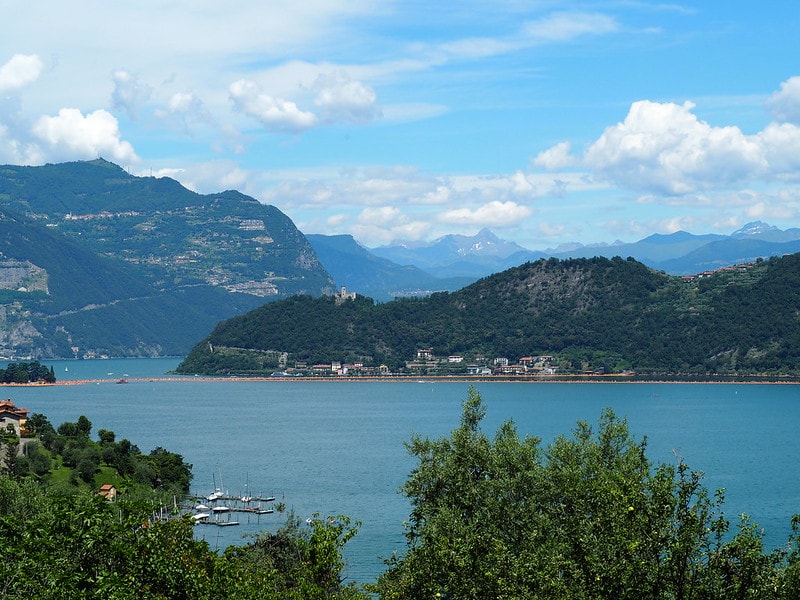
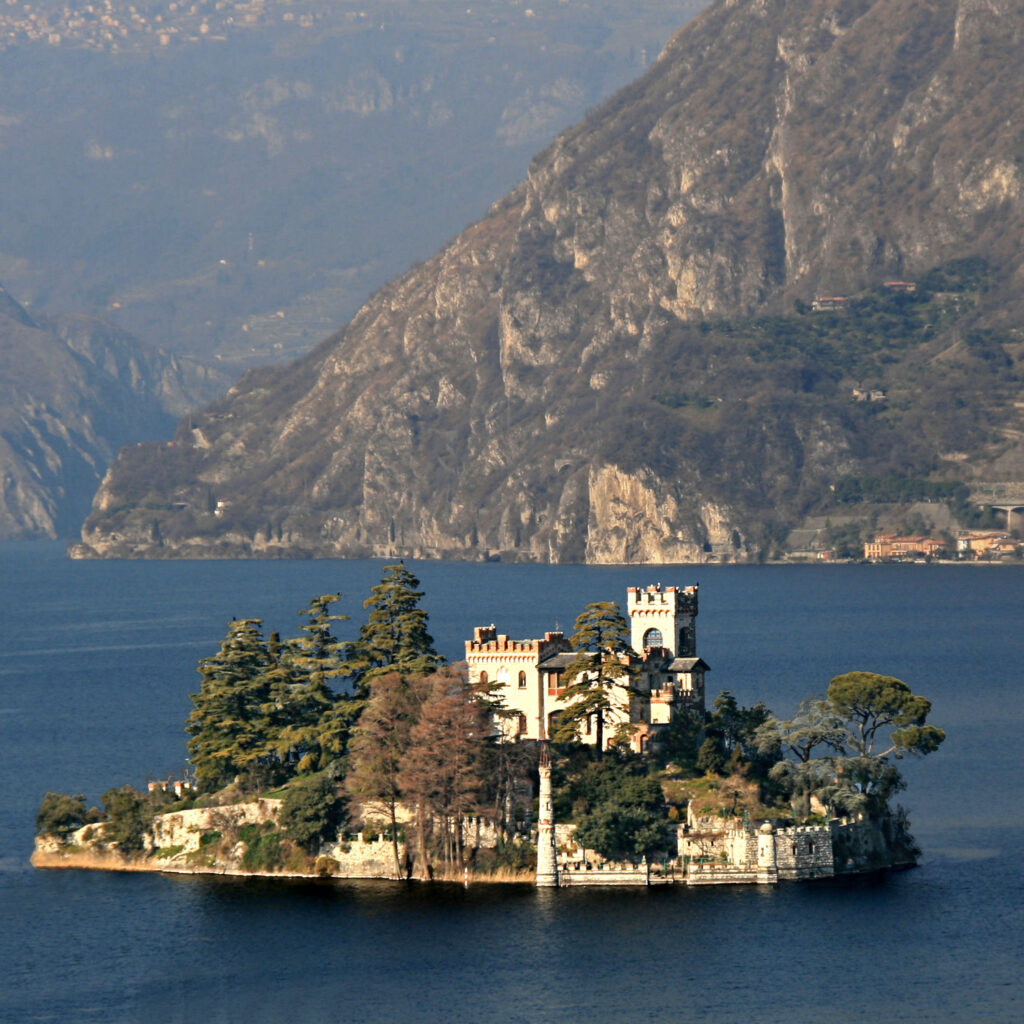
The River Oglio flows in at the northern end, near Pisogne, and out at the southern end at Sarnico. The eastern shore belongs to the province of Brescia, the western shore to Bergamo. In the middle lies Monte Isola, the largest lake island in Italy, where cars are not allowed.
Why is it called Sebino?
Its ancient name is Latin: Sebinus lacus. That is where ‘Sebino‘ comes from, a name you’ll hear and read constantly around here.
You’ll find it in the Torbiere del Sebino Nature Reserve and even on wine labels, in the Sebino IGT produced in Franciacorta. They aren’t two different places: they’re two names for the same lake.
The two shores are quite different
Choosing one is the first decision to make, especially if you only have a day.
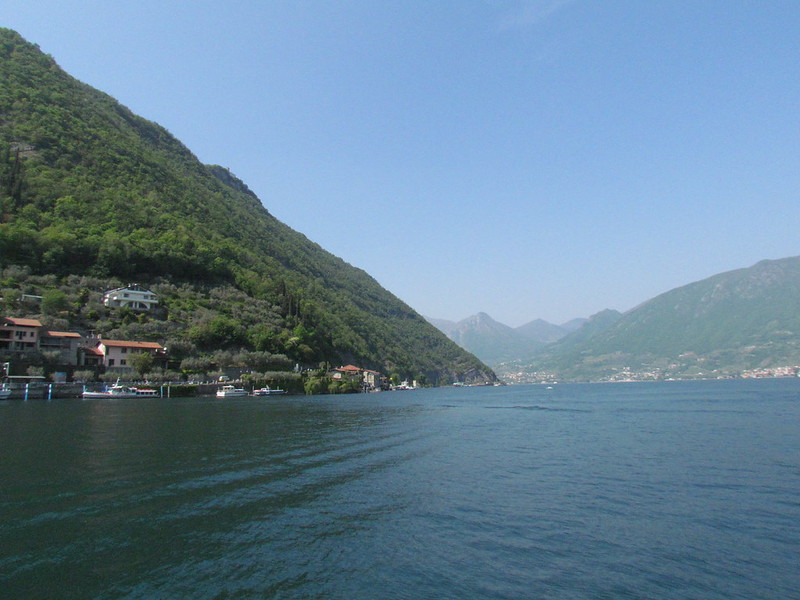
On the Brescia shore, the mountains drop straight into the water, the narrow road threads its way through tunnels and the villages cling to the water’s edge. This is where you’ll find the ferries to Monte Isola, the Zone earth pyramids and the frescoes of Pisogne.
The Bergamo shore is more open and gentler, with the Art Nouveau villas of Sarnico, the Bogn cliffs at Riva di Solto and Lovere at the far end of the lake. Our advice, if you only have one day, is to start with the Brescia shore: Iseo in the morning and Monte Isola in the afternoon.
Getting around Lake Iseo by ferry: how the routes work
Boats cross the lake all day long, and taking one is the best way to see it. Only a handful of routes are really worth knowing, though.
Route
Journey time
Best for
Sulzano → Peschiera Maraglio
~5 min
The quickest and most frequent crossing to Monte Isola
Sale Marasino → Carzano
~10 min
The island’s other landing stage, usually quieter
Iseo → Monte Isola
longer
Handy if you’d rather not drive further north
Linee turistiche e giro del lago
half a day
Seeing the lake from the water, with stops in the villages
Four things worth knowing before you set off:
Car parks at the ferry piers fill up early. On summer weekends, Sulzano is full by mid-morning. Leave early or head for Sale Marasino, which is usually less busy.
Buy a return ticket. It’s worth it: it costs little and saves you a worry on the way back.
Timetables change with the seasons. Sailings are frequent in summer and far fewer in winter. Up-to-date timetables are on the Navigazione Lago d’Iseo website: check them the day before, especially for the last boat back.
You can take your bike on board for a small supplement. It’s the best way to get around Monte Isola.
Monte Isola
It is the largest lake island in Italy and home to around 1,600 people, spread across a dozen or so small hamlets along the shore and on the upper slopes.
Private cars are not allowed. People get around on foot, by bike or on the local bus that loops around the island. That is why the island sounds different from anywhere else on the lake: all you hear are church bells, scooters and little else.
What to do, in order of priority:
The lakeside loop, around nine kilometres and almost entirely flat. On foot it takes a good three hours, by bike much less. If you have half a day, this is the thing to do.
The climb to the Madonna della Ceriola sanctuary, at the top of the island. The view repays the effort, but the path is steep, so wear proper shoes and bring water.
Peschiera Maraglio and Carzano, the two fishing villages where the ferries dock. The wooden boats pulled up on the shore in front of the houses aren’t there for show: they are still in use.
Monte Isola has two traditions worth knowing about. The first is net-making, a craft handed down here for centuries. The second is its local food, above all sun-dried agoni (lake shad), which you’ll find on menus as sardine di lago, and Monte Isola salami. If you stop for lunch, order those rather than the usual fried fish.
In 2016 Christo’s Floating Piers, a walkway floating on the water, linked the island to the mainland and drew more than a million people here in just two weeks.
There is nothing left to see today, but everyone will tell you about it: it is still what the islanders are proudest of.
The Torbiere del Sebino
It is our closest walk, and the most underrated in the area.
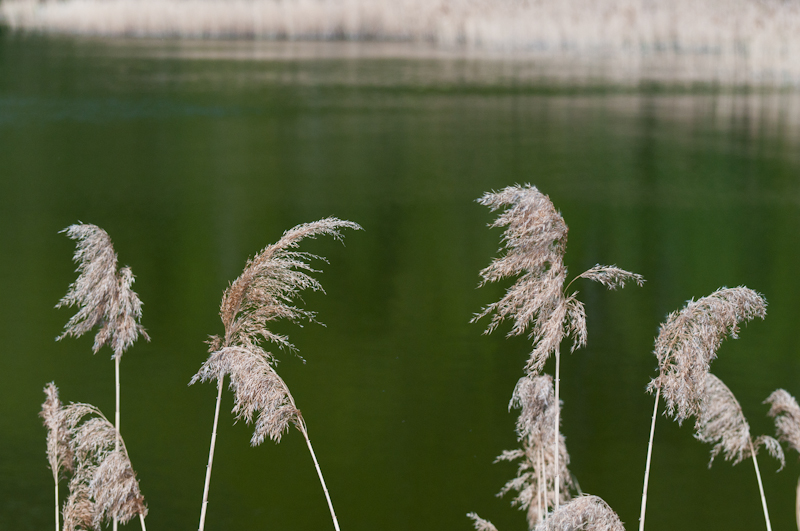
It is a nature reserve created from old peat workings, now a shallow wetland divided into pools and crossed by a loop of wooden boardwalks. You walk just above the water, between reed beds and stretches of open water. There is an entry fee, and the loop takes an easy hour and a half.
The best time to visit is May to June, when the water lilies bloom and the pools turn white. For the rest of the year it remains one of the best birdwatching spots in the area, and in winter the frost on the boardwalks is worth the early start.
Overlooking the reserve is the Monastery of San Pietro in Lamosa, the Cluniac foundation where the reclamation of the whole of Franciacorta began. We tell its story on our Franciacorta page. The two visits fit easily into a single morning.
The lakeside villages
Iseo
The main town on the Brescia shore and the natural starting point. Piazza Garibaldi is home to what is considered the first monument to Garibaldi in Italy, and a short walk away is the Pieve di Sant’Andrea, with its Romanesque façade. The lakefront is pedestrianised, with the ferry pier on one side and bars and restaurants on the other, and a weekly market fills the town centre.
Sulzano, Sale Marasino and Marone
The three ferry villages, one after another along the shore. Heading north from Marone, the Vello–Toline walk follows the old lakeside road, now closed to cars, which runs right along the water’s edge for a couple of kilometres. It is flat and suitable for everyone, with the lake visible right beneath your feet.
Zone and the earth pyramids
The strangest sight on the lake, and hardly anyone goes. Above Marone, the Zone Earth Pyramids Reserve protects dozens of earth spires up to thirty metres high, each topped by a balancing boulder that shielded it from the rain while everything around it was eroded away. A short walk takes you round them, and they make a great outing if you are travelling with children.
Pisogne
At the far end of the lake, at the mouth of the Valle Camonica. It is worth the trip for the church of Santa Maria della Neve, entirely frescoed by Romanino in the 16th century. It has been nicknamed the ‘Sistine Chapel of the poor’, and the nickname is no exaggeration. It is the same painter whose work you can see at the Abbey of Rodengo Saiano, a quarter of an hour from us.
Sarnico, Riva di Solto and Lovere
The Bergamo shore in three stops. Sarnico, where the Oglio leaves the lake, has a group of Art Nouveau villas designed by Giuseppe Sommaruga. Halfway along the shore, the Bogn at Riva di Solto is the most spectacular stretch of the whole lake, with limestone cliffs plunging straight into the water. Lovere, at the far end, is listed among I Borghi più belli d’Italia (the most beautiful villages in Italy) and is home to the Accademia Tadini, a 19th-century art gallery overlooking the lake.
Getting around
By bike. From the cycle path along the shore to the Ciclovia dell’Oglio, which starts here and runs south into the plains. The Monte Isola loop is still the most beautiful ride and the easiest.
On foot. As well as the Vello–Toline walk, there are trails climbing the slopes above the lake. Monte Guglielmo, above the Brescia shore, is the classic summit for views.
On the water. The lake is safe for swimming, with beaches with facilities on both shores. A steady wind blows in the afternoon, so sailing and windsurfing have a long tradition here.
Staying near Lake Iseo
Ca’ Minore è a Camignone di Passirano, tra i vigneti e a un quarto d’ora dall’acqua: abbastanza vicino per andare e tornare quando volete, abbastanza lontano dal traffico della riva per dormire in silenzio.
We are in Camignone di Passirano, a little way inland, and the lake is the first place you reach when you head north from our door.
Destination
From Ca’ Minore
Torbiere del Sebino
10 min
Iseo
15 min
Sulzano (boat for Monte Isola)
20 min
Sale Marasino
25 min
Sarnico
30 min
Pisogne
35 min
Lovere
45 min
If you would rather leave the car behind, there is the train. The Brescia–Iseo–Edolo line stops at Passirano, just a stone’s throw from us, then runs along the whole Brescia shore, with stops at Iseo, Sulzano, Sale Marasino, Marone and Pisogne. For a day on the lake without having to worry about parking, it is the best option we can suggest.
How many days are needed?
One day is enough for Iseo and Monte Isola, if you set off in the morning.
With two days you can also fit in the Torbiere and the Bergamo shore, or Pisogne and the mouth of the Valle Camonica.
The plan that works best for guests staying with us is three nights: a day of wine tasting in Franciacorta, a day on the lake and a day in Brescia. Same base, three different landscapes, and never more than half an hour’s drive.
When to visit
Spring (April–June). The best time for the Torbiere: water lilies in bloom, dry paths, ferries already running a full timetable and no crowds.
Summer. Swimming in the lake, frequent sailings and lively evenings on the lakefront. It is also when the car parks at the ferry piers fill up, so set off early and come back for a swim in our pool during the hottest part of the day.
Autumn. Our favourite season here too: the hillsides change colour, the air is crystal clear and from Monte Isola you can see the mountains far into the distance. It pairs well with the grape harvest in Franciacorta.
Winter. Fewer ferries and some places closed, but the lake under low-lying mist and the frozen Torbiere are a sight you will never see in high season.