Franciacorta: what to see, what to do and
what to know about the wine
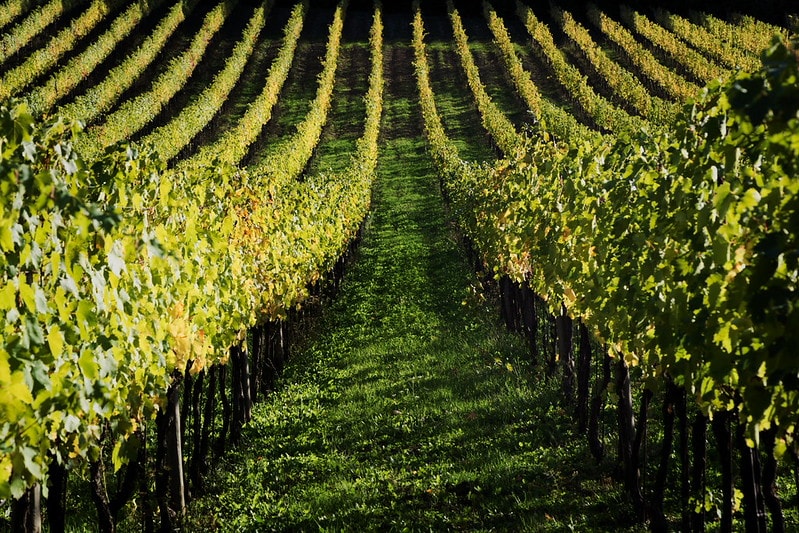
Camignone, where we are, lies within the appellation: the vines you can see from our windows are Franciacorta DOCG vineyards, and the nearest winery is a minute’s drive away. This page is what we tell guests who arrive knowing only that ‘Franciacorta is all about the bubbles’ and leave three days later with a much clearer picture.
Here you will find the area and its boundaries, the wine explained in practical terms and what is worth seeing even when you are not at a tasting.
Where is Franciacorta
It is a band of moraine hills in the province of Brescia, enclosed by four natural boundaries that you can pick out even on a map: the River Oglio to the west, Lake Iseo to the north, the River Mella to the east and Monte Orfano to the south.
Those hills are the debris left behind by an ancient glacier that flowed down from the Valle Camonica. It sounds like a detail from a geology textbook, but it explains everything: the resulting soil is gravelly and free-draining, which is exactly what Chardonnay and Pinot Noir need.
The 19 municipalities of the appellation are Adro, Brescia, Capriolo, Cazzago San Martino, Cellatica, Coccaglio, Cologne, Corte Franca, Erbusco, Gussago, Iseo, Monticelli Brusati, Ome, Paderno Franciacorta, Paratico, Passirano, Provaglio d’Iseo, Rodengo Saiano and Rovato.
Camignone is a village within the municipality of Passirano, right in the middle of the area: ten minutes from the wineries of Erbusco, a quarter of an hour from Iseo and twenty-five minutes from Brescia.
Why is it called Franciacorta?
The most widely accepted explanation is that the name comes from the medieval Latin curtes francae: ‘free’ estates, meaning exempt from duties. They belonged to the monastic communities that, in the 11th and 12th centuries, drained this marshy land and planted the first vineyards, receiving tax privileges in return.
The leading figures were the Cluniac monks, based at San Pietro in Lamosa above what is now the Torbiere del Sebino, and the Olivetan Benedictines of the Abbey of Rodengo Saiano. Both places can still be visited today, and both are a quarter of an hour from here: if you want to understand where everything else comes from, that is the place to start.
One name for the land, the method and the wine
It is the only case of its kind in Italy. ‘Franciacorta’ refers not just to the area, but also to the production method and the wine that comes from it.
The method is secondary fermentation in the bottle: the base wine is bottled with yeast and sugar, slowly ferments a second time in the cellar and rests on its lees for months or years. Only at the end is it disgorged to remove the sediment. Filtration is not permitted, and the grapes must be harvested by hand.
Franciacorta wine styles
Style
Grapes
Minimum time on lees
How to enjoy it
Franciacorta
Chardonnay and/or Pinot Noir; Pinot Blanc up to 50%, Erbamat up to 10%
18 months
The most versatile. As an aperitif or throughout a meal.
Satèn
White grapes only: Chardonnay (at least 50%) and Pinot Blanc. No Pinot Noir
24 months
Finer perlage and a softer mousse. Unique to Franciacorta.
Rosé
At least 35% Pinot Noir, vinified as a rosé
24 months
More body. Stands up to white meat and full-flavoured dishes.
Millesimato (vintage)
At least 85% of grapes from a single vintage, shown on the label
30 months
Captures the character of a specific year.
Riserva
A Millesimato with extended ageing
60 months
Not released until at least 67 months after the harvest.
Satèn deserves a note of its own. It is the only style exclusive to Franciacorta: no other appellation in the world may use the name. The technical difference lies in the pressure, which is kept to a maximum of five atmospheres instead of the usual six, with a limit on the sugar added at bottling. On the palate, the result is creamy rather than crisp. It is only made as a Brut. If you are going to try just one to understand what makes this area different, make it this one.
Erbamat is the latest development: a white grape variety native to the Brescia area, admitted to the production rules in 2017 at up to 10% of the blend. Its role is to make up for the loss of acidity caused by increasingly warm vintages. It still accounts for only a tiny share of the vineyards, but a few producers are working on it seriously. Ask about it at the winery: it is the question that shows you are not there by chance.
Dosage levels, from driest to sweetest
After disgorgement, a small amount of sugar may be added (or not). This is the dosage, and it is the word on the label that really tells you what the wine will taste like in the glass. In order, from least to most sugar:
Pas Dosé (also called Dosaggio Zero or Nature) → Extra Brut → Brut → Extra Dry → Sec or Dry → Demi-Sec
Beware the trap: ‘Dry’ does not mean dry. It is actually sweeter than Brut, and mixing the two up is the most common mistake people make when buying at the supermarket.
Brut is the most widely produced style and the easiest to pair with food.
How to read the label
Franciacorta: if this is the only word, it is the standard style.
Satèn / Rosé: if either appears, the grapes and the character of the bubbles are different.
The dosage: Pas Dosé, Extra Brut, Brut and so on.
The vintage: if there is one, it is a Millesimato or a Riserva. If not, it is a blend of several years. Neither is better than the other: they are simply two different philosophies.
The disgorgement date: this tells you how long the bottle has been ‘awake’. The most careful producers are happy to include it.
Franciacorta, Champagne, Prosecco: what sets them apart?
With Champagne, the method is the same and the grape varieties are similar. What changes is the climate and the scale: the Champagne region produces many times more in a year than Franciacorta does. In the glass, the main difference lies in the ripeness of the fruit.
With Prosecco, the method is different, and the difference is fundamental. Prosecco undergoes its second fermentation in large steel tanks, in just a few weeks, and is made to be fresh and easy-drinking.
Franciacorta ferments a second time in the bottle and rests on its lees for years. It is this long contact that gives it notes of bread crust and dried fruit, and a creamier texture. They are two wines that do different jobs.
Still wines
The same area also produces Curtefranca DOC (white and red) and Sebino IGT. They make up a small share of production and live in the shadow of the more famous sparkling wines, but they are well worth tasting.
Visiting the wineries: which to choose and how to book
It is the main reason people come to Franciacorta, and the question we are asked most often at breakfast.
Rule number one: always book. Almost no winery accepts visits without an appointment, not even at weekends. A tour with tasting lasts around an hour and a half on average and costs roughly €25 to €60 per person, depending on the number of wines and the type of tour. Many wineries are closed on Mondays.
Rule number two: two a day, no more. Once you factor in the tour, the tasting and the driving, fitting three wineries into one day becomes a struggle.
The wineries closest to us
Wineries
Where
From Ca’ Minore
Mosnel
Camignone
1 min
La Montina
Monticelli Brusati
8 min
Le Marchesine
Passirano
8 min
Barone Pizzini
Provaglio d’Iseo
11 min
Bellavista
Erbusco
15 min
Ca’ del Bosco
Erbusco
17 min
Berlucchi
Borgonato di Corte Franca
8 min
Ricci Curbastro
Capriolo
21 min
What to see in Franciacorta besides the wineries
The area features layers of monastic and noble history that wine tourism tends to completely overlook. It is a shame, because it all lies within a twenty-minute radius.
Olivetan Abbey of Rodengo Saiano
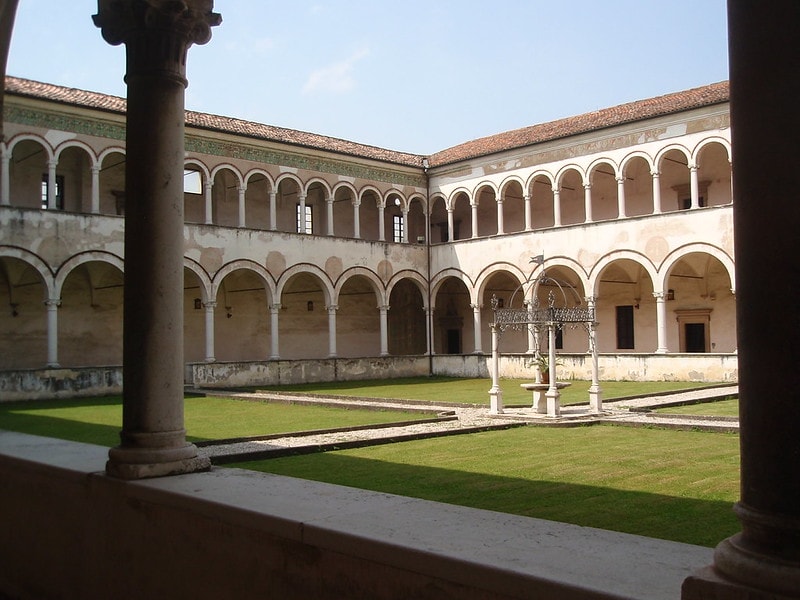
One of the most important Benedictine complexes in Lombardy, with three cloisters, frescoes by Romanino and Moretto and a monumental library. It is still home to an active monastic community.
Monastery of San Pietro in Lamosa
An 11th-century Cluniac foundation overlooking the Torbiere del Sebino, with 16th-century frescoes. Combine it with a walk around the reserve.
The castles
Passirano Castle, just a stone’s throw from us, is one of the best preserved in the area.
Bornato Castle is a rare case in Italy: a 16th-century villa built inside a medieval castle, with an Italian formal garden and a winery open to visitors.
Castello Quistini in Rovato opens its rose garden to the public in spring.
Ome
A small village with three things you would not expect:
the Maglio Averoldi, a 15th-century water-powered forge that still works;
the Conifer Botanical Garden, with 82 species, reachable only on foot after a twenty-minute walk;
the Oak Botanical Garden at the Borgo del Maglio.
Monte Orfano and Rovato
The isolated hill that marks the southern edge of Franciacorta. At the top stands the Santuario dell’Annunciata, with views that reach as far as the Apennines on clear days. Rovato also has a Monday market, one of the oldest in the area.
Getting around
Distances are short, but the area is a network of back roads winding through the hills: a car is still the most practical option, as public transport between the villages is limited.
The realistic alternatives:
By bike. The Strada del Franciacorta has mapped out five signposted cycling routes with gentle climbs. On an e-bike they are within anyone’s reach, and several wineries can be reached by pedalling.
By train. The Brescia–Iseo–Edolo line serves Passirano, Provaglio-Timoline and Iseo. It is handy for getting here, less so for getting around the wineries.
Accommodation in Franciacorta
Ca’ Minore is located in Camignone di Passirano, within the appellation and amidst the vineyards.
Our B&B serves as a base from which everything mentioned above is within a 20-minute drive.
Autumn (September–October). For us, the best season: the grape harvest, colour on the hills and ideal temperatures for walking. September brings the Festival Franciacorta, the weekend when dozens of wineries open their doors at the same time.
Spring (April–May). Vines coming into bud, roses in bloom and perfect cycling weather. In May the 1000 Miglia passes through.
Summer. A lake for swimming a quarter of an hour away, water lilies in bloom at the Torbiere and our pool here for the hottest part of the day.
Winter. Wineries you can visit without the crowds, lower rates and frost on the Torbiere.
How many days?
Two nights is the minimum if you don’t want to rush: one day for the wineries and one for the lake and the Torbiere. With three nights you can add Brescia, or a day on the bike.
Guests who stay five days can reach Lake Garda and Bergamo without ever changing base, which is why so many of our guests choose this location.